
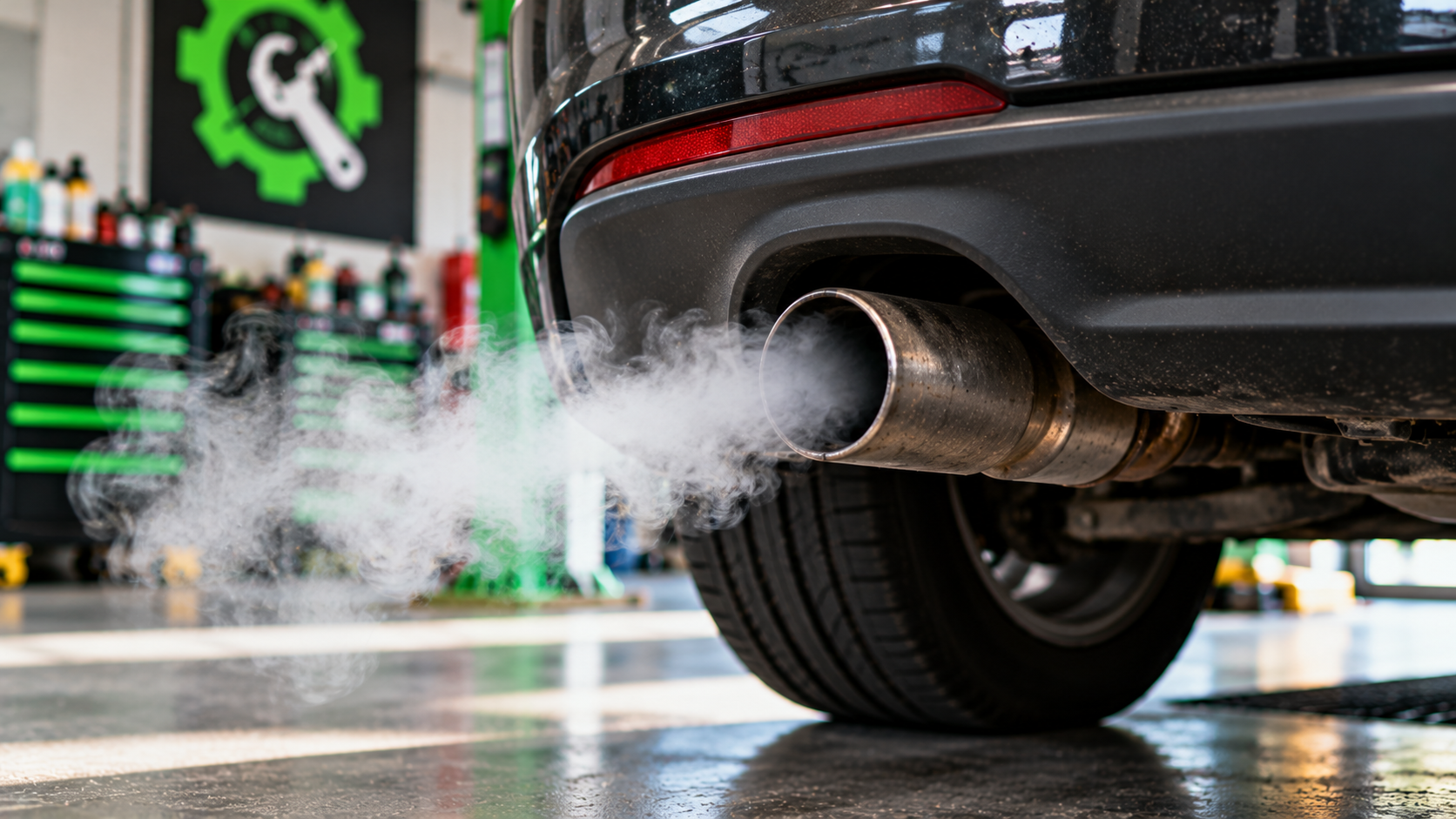
Normal exhaust on a healthy car is easy to overlook, because it barely looks like smoke. Knowing the difference between harmless exhaust and a real problem can save Nashville drivers from expensive repairs later.
Most drivers glance in the rearview mirror and assume anything coming out of the tailpipe is cause for alarm. In reality, a well-running engine produces very little visible output under normal driving conditions. What you do see is usually moisture, not smoke, and it disappears within seconds.
Knowing what to look for and what to ignore helps you make smarter decisions about your vehicle. The color, thickness, and timing of what comes from your exhaust pipe all tell a different story.
What Does Normal Exhaust Smoke Look Like on a Healthy Car?
A healthy engine runs a clean combustion cycle. When fuel and air burn correctly, the byproducts are mostly carbon dioxide and water vapor, and neither stays visible for long under normal conditions.
Thin White Vapor That Disappears Quickly
The most common thing drivers notice is a faint white mist right after starting the engine. This is water vapor, not smoke. Condensation collects in the exhaust system overnight, and as the exhaust heats up, that moisture evaporates and vanishes within a minute or two.
This is normal, especially on cool mornings in Nashville, TN. Once everything warms up, the vapor stops.
What Truly Clean Exhaust Looks Like
On a fully warmed engine under steady driving, you should see almost nothing coming from the tailpipe. A slight shimmer of heat is normal. Any visible mist or color that lingers for more than a few minutes deserves attention.
Healthy tailpipe emissions are essentially invisible. That is a good sign, because it means the engine is burning fuel efficiently and nothing unusual is entering the combustion chamber.
Why Vapor vs. Smoke Matters
Telling vapor from smoke is one of the most important parts of checking your exhaust. Vapor is thin, white, and disappears fast. Smoke is thicker, carries a noticeable color, and tends to hang in the air longer.
If you are unsure what you see, watch how quickly it fades. Vapor usually clears within a foot or two of the exhaust pipe. Smoke lingers, drifts, and often smells.
How Do Temperature and Weather Affect What You See From Your Exhaust?
Outside conditions affect exhaust appearance more than most drivers realize. Cold air, humidity, and seasonal changes can all make normal exhaust look more dramatic than it is.
Cold Weather and Condensation
On cold mornings, the temperature difference between hot exhaust gases and cold air causes visible condensation. This is the same science behind seeing your breath on a winter morning, and it is harmless.
Nashville winters are milder than northern winters, but temperatures still drop low enough to produce this effect regularly. As the engine reaches its normal operating temperature, the visible mist typically stops on its own.
High Humidity Days
High humidity can also make normal exhaust more visible, because moisture already in the air makes the water vapor easier to see. This is not a sign of a problem.
On humid summer days, even a well-maintained vehicle might show a faint white mist for slightly longer than usual. If the vapor is odorless and disappears quickly, you have nothing to worry about.
Idling vs. Driving Conditions
What you see at idle and at highway speed can look different. At idle, exhaust moves slower, and condensation can pool briefly at the end of the pipe. At speed, exhaust disperses faster and is usually less visible.
Checking your exhaust while idling in a parking lot gives you the best view of what is actually coming out. If you only check while driving, you may miss early signs of change.
What Are the Early Warning Signs That Your Exhaust Smoke Is Not Normal?
Once you understand what normal looks like, abnormal becomes easier to spot. A few specific changes in color, smell, and timing should prompt a closer look.
Smoke That Sticks Around After Warm-Up
The clearest early sign of a problem is smoke that does not stop after the engine reaches operating temperature. A quick burst of white vapor on startup is fine. White or gray smoke that continues after a long drive is not.
Persistent smoke often points to something entering the combustion chamber that should not be there, such as coolant, oil, or fuel. Each burns differently and leaves distinct visual clues, and any smoke that lasts beyond the warm-up period deserves attention.
Unusual Smells Alongside the Smoke
Smell is a useful early warning signal. Normal exhaust has a faint, neutral odor that most drivers barely notice. A sweet smell can point to coolant. A sharp, acrid burning smell can point to oil. A raw fuel smell can mean unburned gasoline is passing through the system.
If you notice any of these smells along with visible smoke, that combination narrows the likely cause significantly. Do not ignore an unusual odor just because the smoke looks faint.
Changes That Appear Gradually Over Time
Not every problem announces itself dramatically. Some develop slowly, and the exhaust changes along with them. You might notice that what used to disappear in thirty seconds now lingers for a few minutes, or that a smell you barely noticed a month ago is stronger after longer drives. For Nashville drivers, knowing what normal exhaust looks like and when to worry is the best way to catch a problem before it becomes a costly repair.
Frequently Asked Questions
Is it normal to see white smoke from my exhaust when I first start my car?
White vapor during the first few minutes after startup is normal in most cases, especially on cold or humid mornings. It is condensation burning off inside the exhaust system, and it should disappear once the engine reaches normal operating temperature. If the white smoke continues well past warm-up or has a sweet smell, have it inspected.
How do I know if what I am seeing is vapor or actual smoke?
Vapor is thin, nearly colorless, and disappears within seconds of leaving the exhaust pipe. Smoke tends to be thicker, carries a visible color such as white, blue, or gray, and lingers in the air longer. The smell test helps too: vapor has almost no odor, while smoke from burning oil or coolant usually has a noticeable, distinct smell.
What exhaust changes should I bring to a mechanic?
Have a mechanic evaluate any smoke that persists after the engine fully warms up, any smoke with a color other than faint white, and any exhaust with an unusual smell. Get it checked as well if your exhaust output has gradually changed over recent weeks, even if the change seems minor. Early diagnosis gives you more options and often leads to a simpler repair.