
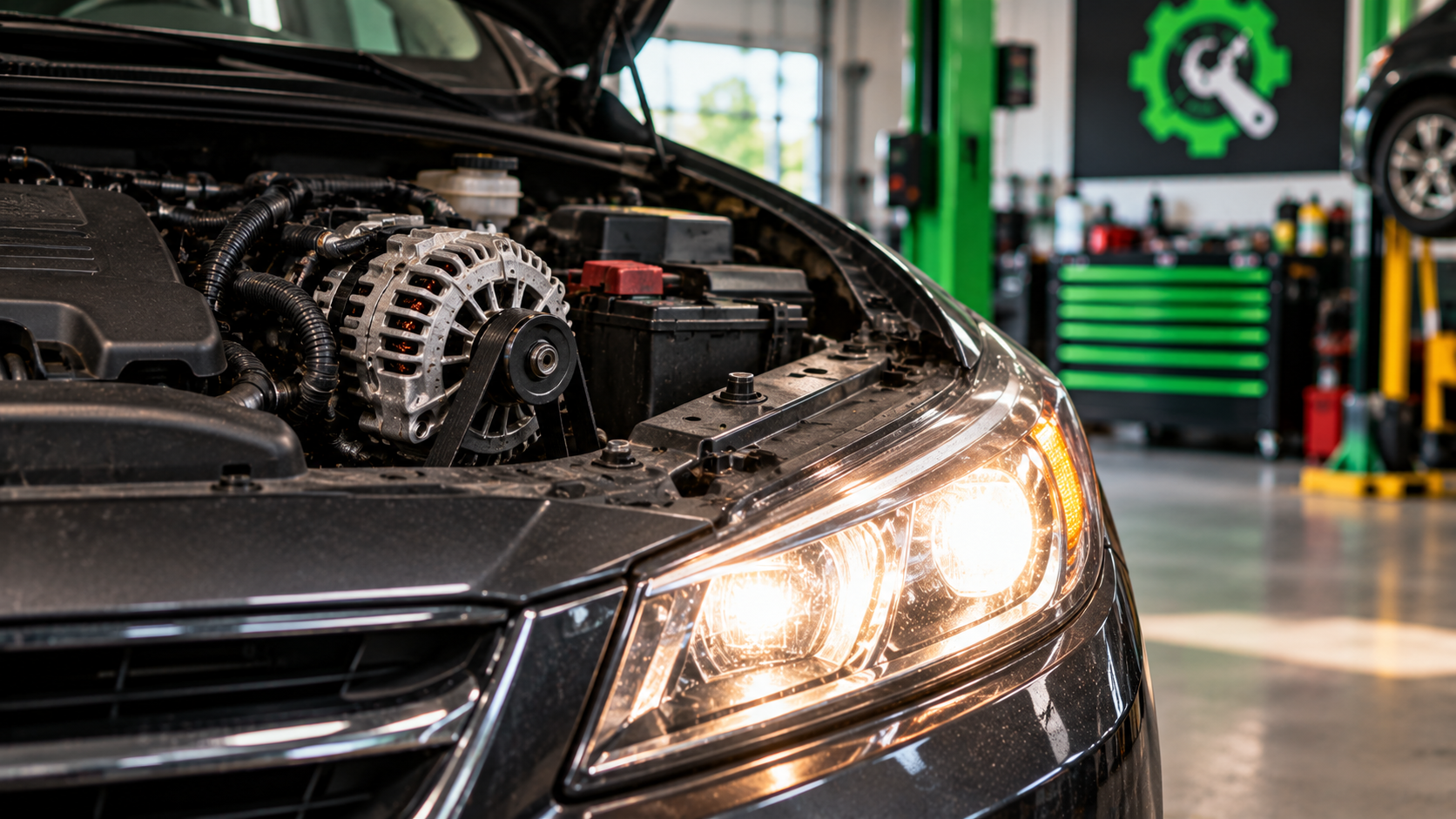
When your headlights start dimming or flickering while you drive, it is easy to assume the battery is dying. In many cases, though, those symptoms point to a failing alternator that needs repair before the problem gets worse. Understanding the difference between a battery problem and a charging system problem can save you from being stranded and help you make smarter decisions about your car.
Why Do My Headlights Flicker When My Car Is Running?
Your headlights do not run on battery power alone once the engine starts. The alternator takes over and keeps everything powered while the car is in motion. When the alternator starts to fail, it cannot maintain a steady electrical output, and that inconsistency often shows up first in your lights.
How the Alternator Powers Your Lights
The alternator converts the engine’s mechanical energy into electricity. That electricity flows through your car’s electrical system and keeps components like headlights, interior lights, and the radio running. A healthy alternator typically delivers a consistent voltage between 13.5 and 14.7 volts. When output drops or fluctuates, the voltage change can make your headlights dim or flicker.
This differs from a battery that simply runs low. A weak battery may cause a slow crank at startup, but once the engine runs, the alternator should do most of the heavy lifting. Flickering headlights with the engine on often signal that the alternator is struggling to keep up with the car’s electrical load.
Why Flickering Gets Worse Under Certain Conditions
You might notice your headlights flicker more when you turn on the air conditioning, the rear defroster, or the seat heaters, because each of these accessories draws more power. When an alternator already underperforms, extra electrical demand makes the fluctuation more obvious.
Some drivers also notice more flickering at idle than at higher speeds. At higher RPMs, the alternator spins faster and can sometimes produce enough power to steady the output. At idle, a failing alternator may fall short of what the system needs, and the lights respond.
When Flickering Is Something Else
Not every flickering headlight is an alternator issue. Loose wiring connections, a failing headlight relay, or a corroded ground wire can cause similar symptoms. That is why a proper diagnostic check matters. Guessing at parts without testing the charging system first can lead to replacing components that were never the real problem.
Does a Bad Alternator Cause Interior Lights to Dim Too?
Yes, and interior dimming is one of the most telling signs of a bad alternator that drivers tend to overlook. Cabin lights, dashboard lights, and instrument cluster brightness all rely on the same charging system as your headlights.
Flickering Dashboard Lights and What They Mean
Flickering dashboard lights are often one of the earliest warnings of an alternator problem. The gauges and indicator lights inside your car rely on stable voltage to display correctly. When voltage fluctuates, you might see the instrument cluster brighten and dim, or notice the speedometer or fuel gauge behaving erratically.
In some vehicles, the battery warning light comes on when alternator output drops too low. This light does not always mean the battery itself has failed. It ties to the charging system overall, and a failing alternator is a common reason it comes on while the engine runs.
The Difference Between Dim Lights and a Dead Battery
A dead or dying battery usually causes problems at startup, before the engine turns over. An alternator problem tends to show up after the engine is already running, because the alternator maintains power at that stage. If your car starts fine but the interior lights fade or flicker while driving, that pattern points more toward the charging system than the battery.
A failing alternator can also drain a battery over time. If the alternator does not recharge the battery while you drive, the battery slowly depletes. Some drivers experience this as a car that starts fine one morning and will not start at all the next day. The battery takes the blame, but the alternator is the root cause.
Checking the Charging System, Not Just the Battery
Many auto parts stores test a battery for free, but that test alone does not tell the whole story. A battery can test as healthy while a bad alternator still drains it. A proper charging system test checks alternator output and load performance, not just battery voltage at rest. A full charging system diagnostic shows exactly which component needs attention.
What Other Electrical Problems Come With a Failing Alternator?
Dimming lights are the most visible symptom, but a failing alternator tends to affect several systems at once. Accessory power loss is one of the most common additional signs once the alternator declines significantly.
Warning Signs Beyond the Lights
Other electrical symptoms often appear alongside flickering or dim lights:
- Power windows slow down or feel sluggish, especially when other accessories run at the same time
- The radio cuts out or resets unexpectedly, or the volume changes on its own as voltage fluctuates
- Heated seats or mirrors stop working consistently, even though they worked before
- The battery warning light appears on the dashboard while the engine runs
- The car stalls or runs rough at idle because the ignition system does not receive enough steady voltage
Any one of these symptoms alone might seem minor. When two or more show up together, especially alongside dimming lights, the pattern strongly suggests a charging system problem.
Strange Smells and Sounds From the Alternator
Some failing alternators produce clues beyond electrical symptoms. A burning rubber smell near the engine bay can indicate a slipping serpentine belt, which drives the alternator. A grinding or whining noise from the front of the engine can point to worn alternator bearings. These physical symptoms often appear around the same time as the electrical ones, which gives you a clearer overall picture.
What Happens If You Keep Driving With a Bad Alternator
Continuing to drive with a failing alternator stresses the battery, which was not designed to power the whole car on its own for extended periods. The battery will eventually discharge completely, and the car can lose power while driving. Irregular voltage from a failing alternator can also stress other electrical components. Addressing the problem before it reaches that point is the more practical path. For drivers noticing dim or flickering lights, getting your alternator and charging system tested early is the best way to avoid being stranded.
Frequently Asked Questions
How do I know if a bad alternator or a bad battery is causing my flickering lights?
Flickering lights while the engine runs usually point to the alternator, not the battery. A battery problem usually shows up at startup, when not enough power remains to crank the engine. Testing both components together as part of a full charging system diagnostic is the best approach, because one failing part can affect the other over time.
Can I still drive my car if the alternator is failing?
You can drive a short distance with a failing alternator, but the battery keeps draining without the alternator recharging it. Eventually the car will lose electrical power and may stall. Get the charging system checked as soon as these symptoms appear to avoid getting stuck somewhere inconvenient.
Will a new battery fix flickering headlights if the alternator is bad?
Replacing the battery without addressing the alternator will not fix the flickering, and the new battery will likely drain for the same reason the old one did. The alternator recharges the battery and powers the electrical system while the engine runs. Fixing the root cause with proper alternator repair restores stable power to your lights and accessories.